Friday, March 28, 2014

Monday, March 3, 2014
For Netanyahu, a bombshell battering by Obama
For Netanyahu, a bombshell battering by Obama
En route to his meeting at the White House, the PM and the rest of the world read that the president believes he’s leading Israel to wrack and ruin
March 3, 2014, 4:18 am

US
President Barack Obama talks with Israeli Prime Minister Benjamin
Netanyahu at the White House in 2012 (photo credit: Avi
Ohayon/Government Press Office/Flash90)
Hello, Mr. Prime Minister.
You’re attempting to maintain “a chronic situation” as regards the
Palestinians. You’ve been pursuing “more aggressive settlement
construction over the last couple years than we’ve seen in a very long
time.” There’ll come a point, you know, “where you can’t manage this
anymore, and then you start having to make very difficult choices: Do
you resign yourself to what amounts to a permanent occupation of the
West Bank?… Do you perpetuate, over the course of a decade or two
decades, more and more restrictive policies in terms of Palestinian
movement? Do you place restrictions on Arab-Israelis in ways that run
counter to Israel’s traditions?” But other than that, Mr. Prime
Minister, welcome to the White House.
Until he read the breaking news of President Obama’s earth-shattering interview with Bloomberg’s Jeffrey Goldberg
on Sunday, Prime Minister Benjamin Netanyahu might have anticipated
that Monday’s meeting was going to be one of his less confrontational
and unpleasant sessions of frank, allied diplomacy with his good friend
Barack.
Sure, the stakes were always going to be high:
The president was going to be urging Netanyahu to assent to Secretary
of State John Kerry’s framework proposal for continued peace talks. And
the prime minister was going to be urging Obama to toughen his demands
on Iran, to ensure that the ayatollahs are deprived of the wherewithal
to build the nuclear weapons they swear they don’t want to build, just
on the off chance that they might be lying.
But Netanyahu, his aides had long been
indicating, was ready to accept the framework proposals — as a
non-binding basis for further negotiations. So no need for confrontation
there. And he must have had little hope that he was going to shift
Obama’s stance on Iran, however powerful he believes his arguments to
be. So not much point in confrontation there, either.
But then came that bombshell Bloomberg battering.
The timing could not have been any more
deliberate — an assault on the prime minister’s policies delivered
precisely as Netanyahu was flying in to meet with him, and on the first
day, too, of the pro-Israel lobby AIPAC’s annual tour de force
conference across town.
At the very least, that might be considered
bad manners, poor diplomatic protocol, a resounding preemptive slap in
the face: I’ve just told the world you’re leading your country to wrack
and ruin, Mr. Prime Minister. Now, what was it you wanted to talk to me
about?
More substantively, the president’s comments
reinforce years of grievance that have accumulated in Netanyahu’s
circles and some distance beyond, to the effect that the president
ignores the inconsistencies, duplicities and worse of the Palestinian
Authority and its leader Mahmoud Abbas, while placing exaggerated blame
for the failure of peace efforts at the door of the Israeli government.
As they read through the transcript of the
interview, Netanyahu and his aides were doubtless bemoaning what they
see as Obama’s obsession with settlements, to the exclusion of almost
any other issue on which the Israelis and the Palestinians are
deadlocked. They would certainly have been lamenting that the
president’s public display of disaffection will hardly encourage the
Palestinians to adopt more flexible positions on such other core issues
as their demand for a “right of return” for millions of Palestinians to
Israel. And they might have been wondering if some of the Obama
ammunition had been fired precisely now as a mark of his displeasure
with AIPAC, the irritating lobby that just won’t keep quiet on
pressuring Iran.
Since even before he became president, Obama
has made plain his conviction that Israel’s settlement enterprise is
profoundly counterproductive for the Jewish state. Many Israelis share
this belief. That Obama chose to highlight his concern in such ominous
and pointed terms, going so far as to warn that it would become harder
in the future for the US to protect Israel from the consequences of its
misguided West Bank building, would suggest that he has all but
despaired of Netanyahu’s willingness to rein in construction. Otherwise,
surely, he would have held his fire, and first consulted face-to-face
with the prime minister.
For one thing is certain, the president’s
resort to a newspaper interview on the eve of their talks to issue
near-apocalyptic warnings about the disaster Netanyahu risks bringing
upon Israel is just about the last thing likely to bolster the prime
minister’s confidence in their alliance, and just about the last thing
likely to encourage Netanyahu to further alienate his hawkish home base
by taking steps such as halting building outside the settlement blocs.
It will be particularly interesting now to see
what platitudes the pair can manage when they invite in the press for
the traditional, brief Q&A session at the White House on Monday.
Doubtless they’ll come up with something. But the fact is that Obama
chose to have his real say about Netanyahu before the prime minister had
arrived, and it constituted a brutal political assault. Other than
that, Mr. Prime Minister, how are you enjoying Washington, DC?
The Backstory to the Russia-Ukraine Confrontation: The US-NATO Encirclement of Russia
The Backstory to the Russia-Ukraine Confrontation: The US-NATO Encirclement of Russia

The Big Picture: The U.S. and NATO Have Been Trying to Encircle Russia Militarily Since 1991
The American press portrays Putin as being the bad guy and the aggressor in the Ukraine crisis.Putin is certainly no saint. A former KGB agent, Putin’s net worth is estimated at some $40 billion dollars … as he has squeezed money out of the Russian economy by treating the country as his own personal fiefdom. And all sides appear to have dirt on their hands in the Russia-Ukraine crisis.
But we can only see the bigger picture if we take a step back and gain a little understanding of the history underlying the current tensions.
Indeed, the fact that the U.S. has allegedly paid billions of dollars to anti-Russian forces in Ukraine – and even purportedly picked the Ukrainian president – has to be seen in context.
Veteran New York Times reporter Steven Kinzer notes at the Boston Globe:
From the moment the Soviet Union collapsed in 1991, the United States has relentlessly pursued a strategy of encircling Russia, just as it has with other perceived enemies like China and Iran. [Background here, here and here.] It has brought 12 countries in central Europe, all of them formerly allied with Moscow, into the NATO alliance. US military power is now directly on Russia’s borders.Stephen Cohen – professor emeritus at New York University and Princeton University who has long focused on Russia – explained this weekend on CNN:
“I think it is the beginning of a new cold war,” warned George Kennan, the renowned diplomat and Russia-watcher, as NATO began expanding eastward. “I think the Russians will gradually react quite adversely, and it will affect their policies.”
We are witnessing as we talk the making possibly of the worst history of our lifetime. We are watching the descending of a new cold war divide between west and east, only this time, it is not in far away Berlin, it’s right on Russia’s borders through the historical civilization in Ukraine. It’s a crisis of historic magnitude. If you ask how we got in it, how we got into the crisis, and how therefore do we get out, it is time to stop asking why Putin – why Putin is doing this or that, but ask about the American policy, and the European Union policy that led to this moment.
***
I don’t know if you your listeners or views remember George Kennan. He was considered [a] great strategic thinker about Russia among American diplomats but he warned when we expanded NATO [under Bill Clinton], that this was the most fateful mistake of American foreign policy and that it would lead to a new Cold War. George lived to his hundreds, died a few years ago, but his truth goes marching on. The decision to move NATO beginning in the 90′s continuing under Bush and continuing under Obama, is right now on Russia’s borders.Jonathan Steele writes at the Guardian
And if you want to know for sure, and I have spent a lot of time in Moscow, if you want to know what the Russian power elite thinks Ukraine is about, it is about bringing it into NATO. One last point, that so-called economic partnership that Yanukovych, the elected president of Ukraine did not sign, and that set off the streets – the protests in the streets in November, which led to this violence in and confrontation today, that so-called economic agreement included military clauses which said that Ukraine by signing this so called civilization agreement had to abide by NATO military policy. This is what this is about from the Russian point of view, the ongoing western march towards post Soviet Russia.
Both John Kerry’s threats to expel Russia from the G8 and the Ukrainian government’s plea for Nato aid mark a dangerous escalation of a crisis that can easily be contained if cool heads prevail. Hysteria seems to be the mood in Washington and Kiev, with the new Ukrainian prime minister claiming, “We are on the brink of disaster” as he calls up army reserves in response to Russian military movements in Crimea.
Were he talking about the country’s economic plight he would have a point. Instead, along with much of the US and European media, he was over-dramatising developments in the east, where Russian speakers are understandably alarmed after the new Kiev authorities scrapped a law allowing Russian as an official language in their areas. They see it as proof that the anti-Russian ultra-nationalists from western Ukraine who were the dominant force in last month’s insurrection still control it. Eastern Ukrainians fear similar tactics of storming public buildings could be used against their elected officials.
Kerry’s rush to punish Russia and Nato’s decision to respond to Kiev’s call by holding a meeting of member states’ ambassadors in Brussels today were mistakes. Ukraine is not part of the alliance, so none of the obligations of common defence come into play. Nato should refrain from interfering in Ukraine by word or deed. The fact that it insists on getting engaged reveals the elephant in the room: underlying the crisis in Crimea and Russia’s fierce resistance to potential changes is Nato’s undisguised ambition to continue two decades of expansion into what used to be called “post-Soviet space”, led by Bill Clinton and taken up by successive administrations in Washington. At the back of Pentagon minds, no doubt, is the dream that a US navy will one day replace the Russian Black Sea fleet in the Crimean ports of Sevastopol and Balaclava.
***Again, we don’t believe that there are angels on any side. But we do believe that everyone has to take a step back, look at the bigger picture, calm down and reach a negotiated diplomatic resolution.
Vladimir Putin’s troop movements in Crimea, which are supported by most Russians, are of questionable legality under the terms of the peace and friendship treaty that Russia signed with Ukraine in 1997. But their illegality is considerably less clear-cut than that of the US-led invasion of Iraq, or of Afghanistan, where the UN security council only authorised the intervention several weeks after it had happened. [Indeed, top American leaders admit that the Iraq war was for reasons different than publicly stated. And the U.S. military sticks its nose in other countries' business all over the world. And see this.] And Russia’s troop movements can be reversed if the crisis abates. That would require the restoration of the language law in eastern Ukraine and firm action to prevent armed groups of anti-Russian nationalists threatening public buildings there.
And see this, this, this and this (interview with a 27-year CIA veteran, who chaired National Intelligence Estimates and personally delivered intelligence briefings to Presidents Ronald Reagan and George H.W. Bush and the Joint Chiefs of Staff).
Natural Gas is What Detonated the Ukraine Crisis
Natural Gas is What Detonated the Ukraine Crisis

Few in the western media, much less the leading political mouths in Britain, Europe and the US, are willing to address what triggered this latest geopolitical ‘crisis’. It’s better to move the public along with the threat of war narrative (much better for news ratings).
Always Smoldering – Ukraine’s Gas Debts to Russia
Defending Moscow’s December 18, 2013 agreement to provide Ukraine with an aid package estimated at about $15 billion, and cheaper natural gas through discounts and “gas debt forgiveness” estimated as able to save Ukraine $7 bn in one year, Vladimir Putin said the decision to invest $15 bn in ‘brotherly slavic’ Ukraine, and grant the gas discount was “pragmatic and based on economic facts”.
At the time, the “investment” in Ukraine was already conditional – not only on the political issue of Ukrainian loyalty to Moscow – but on Ukraine complying with previous longstanding, often revoked, modified or extended commitments to repay gas debts dating from as far back as the early 1990s. In December, Russia’s Finance minister Anton Siluanov said payment of the “aid or investment” funds to Ukraine, in tranches of about $2 bn each, would need Ukraine making a serious response to end-2013 estimates, by Russia, of the minimum “monetized gas debt” Ukraine has to pay. Siluanov’s ministry said this was about $2.7 bn, itself a large downward revision on other published figures from Russian sources, extending well above $5 bn. His ministry also published statements suggesting that Ukraine’s non-payment of gas taken and consumed by the country, since 2010, ran at a yearly average as high as $2 – $2.25 bn.
To be sure, events starting in February as the “Maidan movement” drew massive public support in the capital and western Ukraine to overthrowing the government-in-place. This was a repeat of Egypt’s anti-Morsi flash mob street revolution, followed by the Saudi-financed military coup against elected president Morsi. In Ukraine, however, the street magic stopped in the east, and especially in Crimea where 75%-85% of votes cast in the 2010 election were for Viktor Yanukovych.

To be sure, this blood-colored version of the Orange Revolution aimed at aligning Ukraine with the European Union may have scarpered further bail out payments by Moscow. Any upping of the ante, as enacted and supplied by NATO and John Kerry, could lead to Russia also making a total shutdown of gas supply to Ukraine – Kiev’s Independence Square flash mob could hope that Global Warming will shorten the winter, ease heating needs, and give Ukraine a head start for becoming a debt wracked European Union associated country – but this is far from a sure thing.
Debt, Gas Debt and Gas Prices
The national gas debt will surely feature in the round of proposals for “Ukraine bailout” being developed by the IMF, European Commission, EU member states on a bilateral basis, the US and potentially other actors, including the ECB and the UN ECE (the UN’s European economic agency), as well as private banks and energy companies. One thing is sure and certain, much higher gas prices for Ukraine are inevitable, under any scenario.
As of early January 2014, Russia’s second largest state bank, VTB, organized the first tranche of the $15 bn financial bailout, by making a $3 bn sale of Ukrainian debt bonds on the Irish Stock Exchange, guaranteed by Russia’s $88 bn sovereign-wealth National Welfare Fund, which was also tasked with financing of the $7 bn natural gas price discount and gas debt forgiveness to Ukraine in counterparty for Ukrainian starting payment of its monetized gas debt.
Current estimates of Ukraine’s total national debt stand at about $145 bn, around 80% of GDP in 2013, but late-February foreign exchange reserves were said by newswires to be only about $15 bn.
Although heavily affected by political rivalries and disputes, Yulia Tymoshenko’s two-month-only role as Ukrainian deputy prime minister responsible for fuel and energy, in 1999-2000, included her attempts at cutting back Ukraine’s constantly rising gas debt, by proposing a huge increase in gas prices inside the country. One of her proposals was for Ukraine to start paying Russia’s Gazprom $400 per thousand cubic meters (about $11 per million BTU, close to current west European prices at the major gas hubs NBP, Zeebrugge, Baumgarten).
After her “time in the political wilderness” and return to power as Prime Minister in 2007, this price was a major bargaining chip in very rocky Ukrainian negotiations with the Kremlin and Gazprom. Her supposedly “surprising” decision to pay for Ukraine’s gas through gas trading using a specially created Switzerland-based trading subsidiary, partly owned by Gazprom and major business and political figures in Ukraine – several of them “suspected of organized crime” – was a key factor in the 2009 “Ukraine-Russia gas crisis”. Tymoshenko tried a political wriggle-out by claiming there was either no outstanding Ukrainian gas debt – or that if it existed, it was now the debt of Swiss-registered company called, RusUkrEnergo.
Only for year 2008 gas deliveries, the new and additional gas debt of Ukraine towards Gazprom was estimated by analysts at about $2.4 bn. Since 2010, about the same annual rate of gas debt increase is claimed to have been racked up by Ukraine, according to Russian sources such as Alfa Bank Moscow.
Certainly at times in the long, complicated and dispute-riddled negotiations with Tymoshenko, Alexei Miller, CEO of Gazprom said his corporation could and would supply Ukraine with gas at $235 per thousand m3, but RusUkrEnergo was too attractive to Ukrainian business and political players as an opaque gas payments and trading entity able to be milked for huge kickbacks. On January 1, 2009 Russia halted all shipments of gas to Ukraine and demanded $450 per thousand m3. Then prime minister of Russia, Vladimir Putin said that $470 would be the future price, close to the 2009-price paid by many EU national gas companies “lower down the gasline”, of about $500.
Proving the extent to which this was Kremlin armtwisting of Ukraine, to make Tymoshenko close down RusUkrEnergo for reasons including this entity’s total impossibility of repaying national gas debt, when gas supplies were resumed after the crisis they were billed by Gazprom at about $230 per thousand m3, far below then-current west European gas prices, and still so, today.
Even this price was however too much to pay, for Ukraine. To be sure, inside Ukraine, especially after its government collapse and the “disappearance” of its now-fugitive (for western Ukrainians) former president Yanukovych, Russia can be portrayed as cynically allowing Ukraine to run up massive, unpayable gas debts. For Gazprom however, the euros-and-cents costs of gas supplies, trade and disputes with Ukraine over the years is a black hole for corporate finances. Some analysts suggest that only for the three years 2011-2013 Ukraine’s total gas debt could be $7 bn, and that writing this amount off (calling it a “friendship discount”), and returning to the previous $2.7 bn “official monetized gas debt” figure was pure political largesse by Vladimir Putin, aimed at buying Ukrainian loyalty.
The Spring Gas Crisis is Coming
Ukraine-Russia gas crises are “traditionally” short wintertime crises, which ups the ante each time, as Ukrainians start to freeze, businesses and industry shut down and the lights go out. This time however, the effects may be enduring. Ukraine’s gas debt will certainly feature in negotiations aimed at relaunching the Ukrainian economy. Gas supplies to the country from Russia, under a presently far-from-impossible worst case scenario, could be terminated pending the immediate and full payment of outstanding gas debt – without “friendship discounts”. Currently Ukraine is unable to pay west European gas prices or repay gas debt, or its sovereign national financial debt. To be sure, if Ukraine’s gas supply is cut off, this will create havoc “further down the gasline” and reignite the energy security debates that the short but dramatic 2009 crisis triggered across Europe.
In a 26 February article “Sustaining Ukraine’s Breakthrough” published by Project-syndicate, George Soros argued that Ukraine needs a modern equivalent of the Marshall Plan. He reminded his readers that while the Marshall Plan aided western Europe’s recovery from the ravages of World War II, it did not include the Soviet bloc and reinforced the Cold War division of Europe. Soros said that a replay today of the Cold War would cause immense damage to both Russia and Europe, but he forgot to say that this time around, Ukraine needs a Marshall Gas Plan.
With no shadow of doubt “the gas question” will feature in what happens in the present stand-off between Putin’s Russia and the west – and inside Ukraine – and will powerfully underline the energy economic interdependence of Russia and Europe.
Also sure and certain, Ukraine will pay much more for its gas, and will have to face its accumulated gas debt, as the role of seaboard LNG terminals is given more attraction due to the present crisis, underlining the geopolitical risk of international gas pipelines.
Our new society is "almost" here.
 Be the Ones to Deliver the most important document at the time of the Event

Community Leaders Brief can be seen HERE
Beautiful and holistic changes are occurring everywhere on Earth! All people are invited to Participate as a New Society is being born into the Light of Truth. A massive surge of positive feelings is powering a deep shift worldwide. Optimism and joy are creating peace in everyone as they are filled with an instinctive knowing of truth and humanity’s potential for loving change.The unfolding of love and truth has been written about and spoken of by the great prophets, sages and mystics of all cultures for thousands of years, it is THE EVENT when humanity is lifted above the darkness and fear that has so engulfed us. Now is the time prophesied, the Victory of the Light!
Prepare For Change is here to connect all people, particularly those who have experienced the Light of Truth, together in loving, peaceful support of a prosperous New Society. Those who have experienced the Light of Truth know more from that brief interlude than they could learn from any teacher alive today. You, who already have this knowing, are called to action. Assisting the awakened as they seek the presence of other lighted beings is our first job, so that we can then share the awareness that is our unique gift. Call all who know the Light of Truth! Ask them to join you in meditation and prayer to increase the energy of peace in your community! Organize to lift the spirits of everyone by sharing your special gifts in true love and openness. Every village, town and city needs loving leadership to embrace change as never before in human history.
The Event by Rob Potter A Video by Gary Lite.
It is very important that after you have registered a new “Event Support Group” on the “Meet-Up” site that you come back to this page and click here so we can put your information on our site Click Here
The official “Meet-Up” site ( http://www.meetup.com/Prepare-Please be aware that at the time of “The Event” this site will be getting perhaps millions of hits and sign up for groups will increase tremendously. We hope you will still be active and take your role seriously and be able to be a force for peace, truth and understanding at the time of “The Event”. The PFC Team Thanks you
Country
|
Territory / State
|
City
|
Organizers
| |
|---|---|---|---|---|
| A | ||||
| Australia | Braidwood | Braidwood | Mandi Lamont mandi.lamont @gmail.com |  |
| Australia | Victoria | Melbourne | N/A | |
| Australia | Western Australia | Geraldton | Dave Ashwell: info@agrilube.com.au | |
| Australia | Western Australia | Perth | N/A | |
| Austria | Vienna | Vienna | Sylvia Blue | |
| B | ||||
| Bulgaria | Plovdiv | Plovdiv | Jordan Georgiev | |
| Belgium | België | Antwerpen | S.J: 2012transitie @gmail.com Page | |
| Belgium | Liège | Liège | phgilis2 @gmail.com | |
Showing 1 to 10 of 298 entries
If you do not see your “Meet-Up” Event Support Group listed here on our site please Click Here
China Joins Forces With Russia Against U.S.
China Joins Forces With Russia Against U.S.
It remains to be seen what, if any, support China might offer in Russia’s action.

Secretary of State John Kerry is expected to visit Kiev this week to meet with Ukraine’s current leaders.
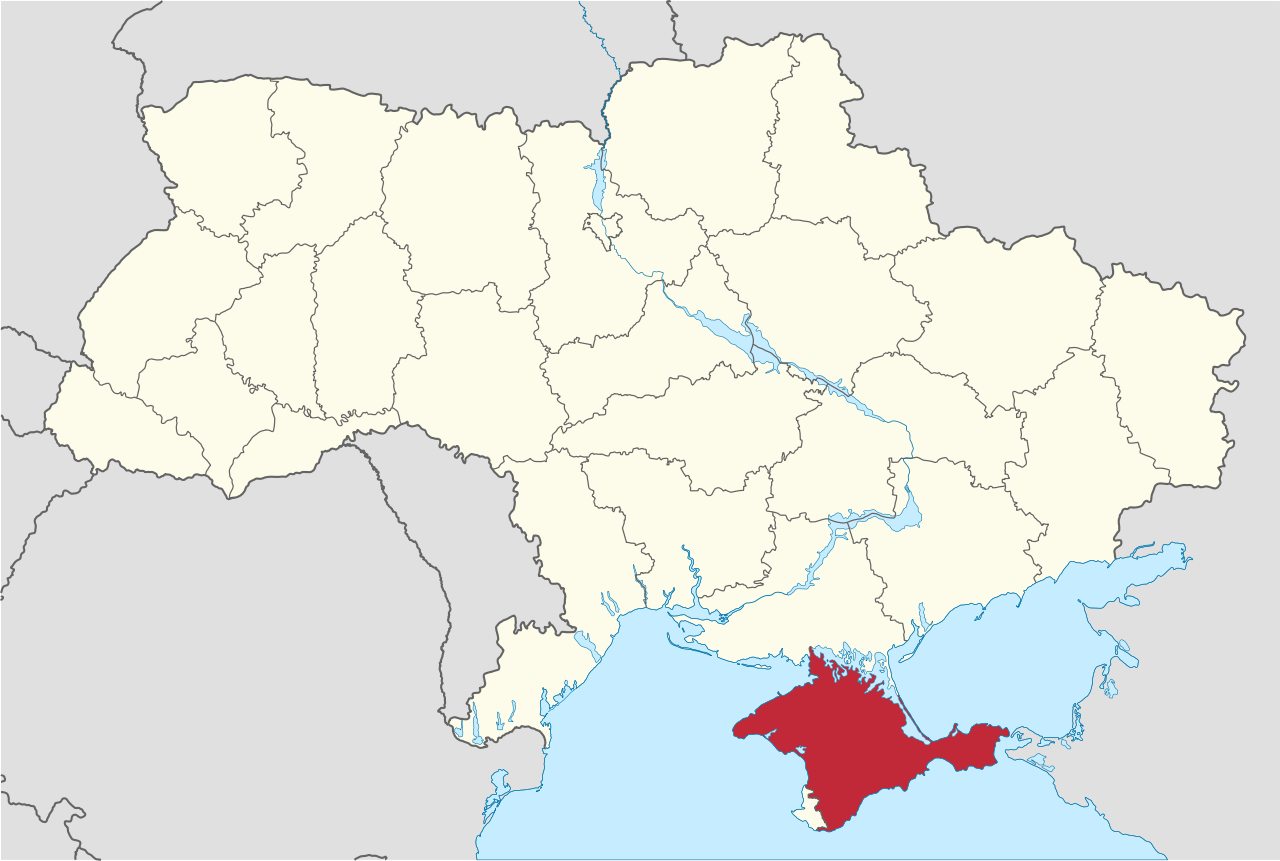
Sergei Lavrov, Russia’s foreign minister, announced Monday that he and Wang Li, who holds an equivalent position in China, discussed the ongoing occupation of Crimea, describing “broadly coinciding points of view” regarding the issue.
In addition to America and Canada, several European nations issued a statement indicating they “condemn the Russian Federation’s clear violation of the sovereignty and territorial integrity of Ukraine.”
William Hague, Britain’s foreign secretary, is already in Kiev and called the current action this century’s biggest European crisis.
“It’s impossible to be optimistic at the moment,” he asserted. “We’re not in any position to be optimistic about the security situation and what is happening in the Crimea.”
Russia, which has military capabilities that best the Ukraine in virtually all respects, is now further emboldened by its alignment with China. The Russian parliament authorized President Vladimir Putin to use force in the region Saturday, leading to an operation that took place as millions of Americans were watching the Oscar awards Sunday evening.
It remains to be seen what, if any, support China might offer in Russia’s action. Likewise, America has yet to offer any firm response to the ongoing dispute.
Ukrainian Prime Minister Arseny Yatseniuk remains defiant, however, insisting the nation will “never give up Crimea to anyone” and imploring Russian occupiers to leave the area.
Still, an alliance between China and Russia in any military operation is cause for concern around the world. As Trevor Loudon, a political activist and author from New Zealand, reported in the recent Western Conservative Conference, both nations have hinted at both the capability and desire to potentially engage in military action against the U.S.
Meanwhile, the Obama administration is determined to continue shrinking American armed forces and driving up our national debt, making our potential retaliation to such threats woefully inadequate.
–B. Christopher Agee
Have an idea for a story? Email us at tips@westernjournalism.com
Photo Credit: Wikimedia Commons
Why is China Hoarding all the Gold? Get this Critical Info for Your IRA or 401(k) >
Ukraine: Israeli Special Forces Unit under Neo-Nazi Command Involved in Maidan Riots
Ukraine: Israeli Special Forces Unit under Neo-Nazi Command Involved in Maidan Riots

Under the title “In Kiev, an Israeli army vet led a street-fighting unit”, the Jewish News Agency JTA confirms that soldiers from the IDF were involved in the EuroMaidan protest movement under the direct command of the Neo-Nazi Svoboda Party. The Svoboda Party follows in the footsteps of World War II Nazi collaborator Stepan Bandera.
The leader of the “Blue Helmets of Maidan” is Delta “the nom de guerre of the commander of a Jewish-led militia force that participated in the Ukrainian revolution”. Delta is a Veteran of the notorious Givati infantry brigade, which was involved in numerous operations directed against Gaza including Operation Cast Lead in 2008-2009.
The Givati brigade was responsible for the massacres in the Tel el-Hawa neighborhood of Gaza. Delta, the leader of the EuroMaidan IDF unit acknowledges that he acquired his urban combat skills in the Shu’alei Shimshon reconnaissance battalion of the Givati brigade.
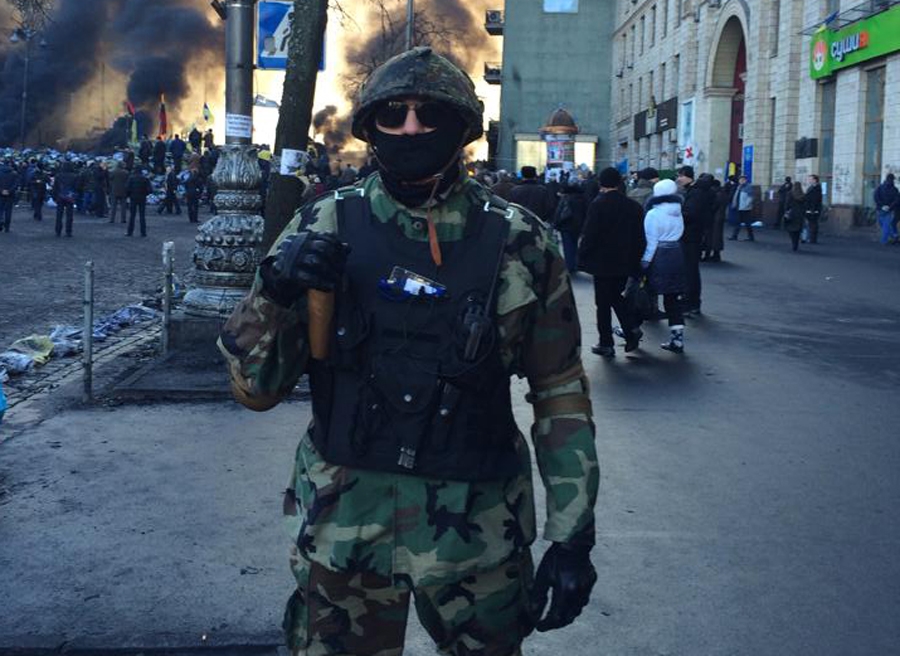
Delta, the nom de guerre of the Jewish commander of a Ukrainian street-fighting unit, is pictured in Kiev earlier this month. (Courtesy of ‘Delta’)
According to the JTA report, Delta was in command of a force of 40 men and women including several former IDF veterans. In the EuroMaidan, Delta was routinely applying his skills of urban warfare which he had used against the Palestinians in Gaza.
The Maidan “Street fighting unit” under Delta’s command was involved in confronting government forces. It is unclear from the reports whether the EuroMaidan combat unit was in liaison with IDF command headquarters in Israel:
The Blue Helmets comprise 35 men and women who are not Jewish, and who are led by five ex-IDF soldiers, says Delta, an Orthodox Jew in his late 30sIn a bitter irony, Delta, the commander of the IDF militia unit was taking his orders directly from the Neo-Nazi Party Svoboda:
Delta, who immigrated to Israel in the 1990s, moved back to Ukraine several years ago … He says he joined the protest movement as a volunteer on Nov. 30, after witnessing violence by government forces against student protesters.
“I saw unarmed civilians with no military background being ground by a well-oiled military machine, and it made my blood boil,” Delta told JTA in Hebrew laced with military jargon. “I joined them then and there, and I started fighting back the way I learned how, through urban warfare maneuvers. People followed, and I found myself heading a platoon of young men. Kids, really.”
The other ex-IDF infantrymen joined the Blue Helmets later after hearing it was led by a fellow vet, Delta said.
As platoon leader, Delta says he takes orders from activists connected to Svoboda, an ultra-nationalist [Neo-Nazi] party that has been frequently accused of anti-Semitism and whose members have been said to have had key positions in organizing the opposition protests.
“I don’t belong [to Svoboda], but I take orders from their team. They know I’m Israeli, Jewish and an ex-IDF soldier. They call me ‘brother,’” he said. “What they’re saying about Svoboda is exaggerated, I know this for a fact. I don’t like them because they’re inconsistent, not because of [any] anti-Semitism issue.”
 Neither
the Tel Aviv government nor the Israeli media have expressed concern
regarding the fact that the EuroMaidan protests were led by Neo-Nazis.
Neither
the Tel Aviv government nor the Israeli media have expressed concern
regarding the fact that the EuroMaidan protests were led by Neo-Nazis.With the formation of a new government composed of NeoNazis, the Jewish community in Kiev is threatened. This community is described as “one of the most vibrant Jewish communities in the world, with dozens of active Jewish organizations and institutions”. A significant part of this community is made up of family members of holocaust survivors. “Three million Ukrainians were murdered by the Nazis during their occupation of Ukraine, including 900,000 Jews.” (indybay.org, January 29, 2014).
“It’s bullshit. I never saw any expression of anti-Semitism during the protests”
In a bitter twist, the Blue Helmet IDF unit in the EuroMaidan has been the object of praise by the Israeli media. According to Ariel Cohen of the Washington based Heritage Foundation: “The commanding position of Svoboda in the revolution is no secret”. The participation of Israeli soldiers under Neo-Nazi Svoboda command does not seem to be an object of concern:
On Wednesday, Russian State Duma Chairman Sergey Naryshkin said Moscow was concerned about anti-Semitic declarations by radical groups in Ukraine.But Delta says the Kremlin is using the anti-Semitism card falsely to delegitimize the Ukrainian revolution, which is distancing Ukraine from Russia’s sphere of influence.See Svoboda and Right Sector militants honoring Stepan Bandera(image below)
“It’s bullshit. I never saw any expression of anti-Semitism during the protests, and the claims to the contrary were part of the reason I joined the movement. We’re trying to show that Jews care,” he said.
Bandera was a Nazi collaborator involved in the Third Reich’s Einsatzgruppen (Task Groups or Deployment Groups) . These “task forces” were paramilitary death squads deployed throughout the Ukraine.

Neo-Nazis Honoring Stepan Bandera
The JTA article can be consulted at www.jta.org/2014/02/28/news-opinion/world/in-kiev-an-israeli-militia-commander-fights-in-the-streets-and-saves-lives#ixzz2uvYcMBEl
Subscribe to:
Posts (Atom)